

How Aesop turned intellectual rigour into a $2.5 billion brand
The cult of uncompromising discipline

The Brandsider brings you inside the world’s most magnetic brands. Subscribe for deeply researched analysis and case studies, or enquire about working together.
February 7, 2025 | Edinburgh, UK
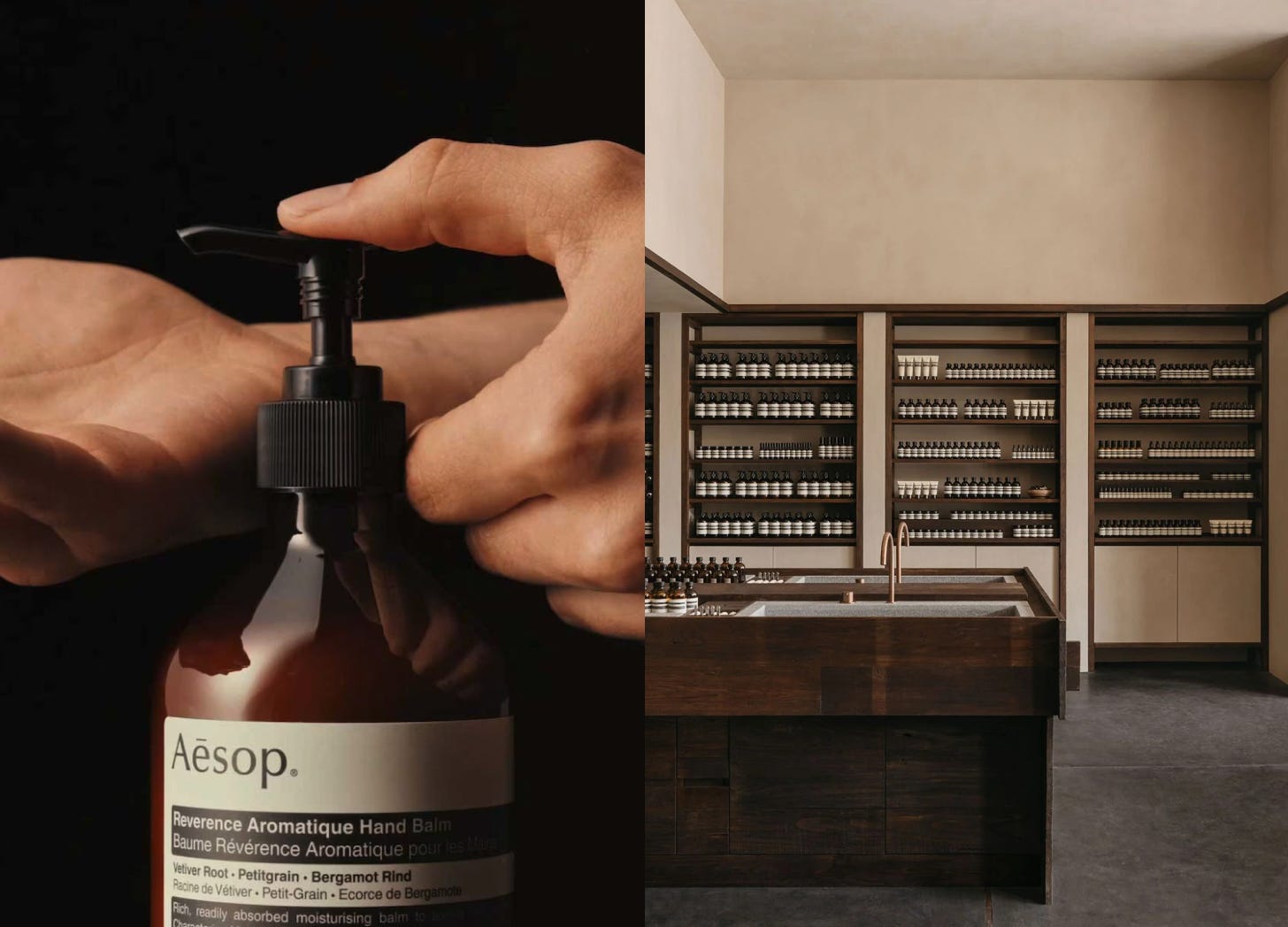
There’s a specific amber bottle that shows up just about everywhere. On a hotel bathroom counter. In a friend’s minimalist apartment. At that members’ club you visited last month, perched beside a hand towel that had been folded just so.
You know the one: clean typography, ecru label, that unmistakable silhouette. Even when it’s been stripped and refilled with supermarket soap (because yes, people actually do this and brag about it on Reddit) – you can still tell what it’s referencing.
I’ve been thinking about this bottle for a long time. Not because of how it looks, but because of what it represents: the most imitated brand in beauty, and the one that no one has actually managed to crack. Competitors have copied the packaging, the palette, the serif font, even the simple product descriptions. Some have come close enough that you’d have to read the label twice.
But the experience of walking into an Aesop store — that particular feeling of calm, of order, of being in a place where someone has thought about everything so you don’t have to — has yet to be replicated.
The reason, I think, is that most people misunderstand what Aesop actually is. They see a beauty product with great branding. What they’re missing is that Aesop is a philosophy that happens to sell skincare. And that distinction — between a brand that looks considered and one that genuinely is considered — is the entire story.
(P.S. Don’t forget to watch The Brandsider video companion to this case study.)
The fabulist hairdresser
In 1987, a Melbourne-based hairdresser named Dennis Paphitis started mixing essential oils into the products he used in his salon. His clientele was demanding — the kind of people who noticed everything — and he wanted to create something more restorative for them. Something that matched the standard of attention he brought to everything else.
That salon, Emeis (Greek word for ‘we’), became the birthplace of Aesop. But Paphitis wasn’t building a beauty brand. He was, even then, laying out a belief system. That beauty should emerge from intellect. That small choices reveal character. That thoughtfulness, applied consistently, is the highest form of luxury.
He named the brand after the ancient Greek fabulist — the storyteller who embedded a moral lesson in every tale. It was a declaration of intent. “There is little morality in the world of commerce,” Paphitis later said, “so it seems fitting that we should anchor our thoughts and actions to something of merit.”
What followed was almost four decades of proving, through thousands of small decisions, that he meant it. Products that take between two and ten years to formulate. The brand’s cruelty-free and vegan stance that predated industry trends by decades. Each formula stripped of anything superfluous — no filler ingredients, no exaggerated claims, no shortcuts. Literary and philosophical quotes that appear on packaging, not as decoration, but as an extension of the brand’s belief that intellectual life and daily ritual aren’t separate domains.
In 2012, Brazilian cosmetics group Natura & Co took a 65% stake in Aesop for $71.6 million, with Paphitis staying on in an advisory capacity until the group took full control in 2016. Under Natura’s stewardship, the brand expanded from roughly 60 stores to nearly 400 globally, with revenue soaring from $28 million in 2012 to $537 million by 2022.
By the time L’Oréal acquired Aesop in 2023 for $2.525 billion — the conglomerate’s largest acquisition in history — the hairdresser’s philosophy had produced a brand so distinctive that an entire category now bears its fingerprint, whether it wants to or not.
For your consideration
In 2026, there is no shortage of body care brands offering high-quality formulations, clean ingredient lists, and tasteful design.
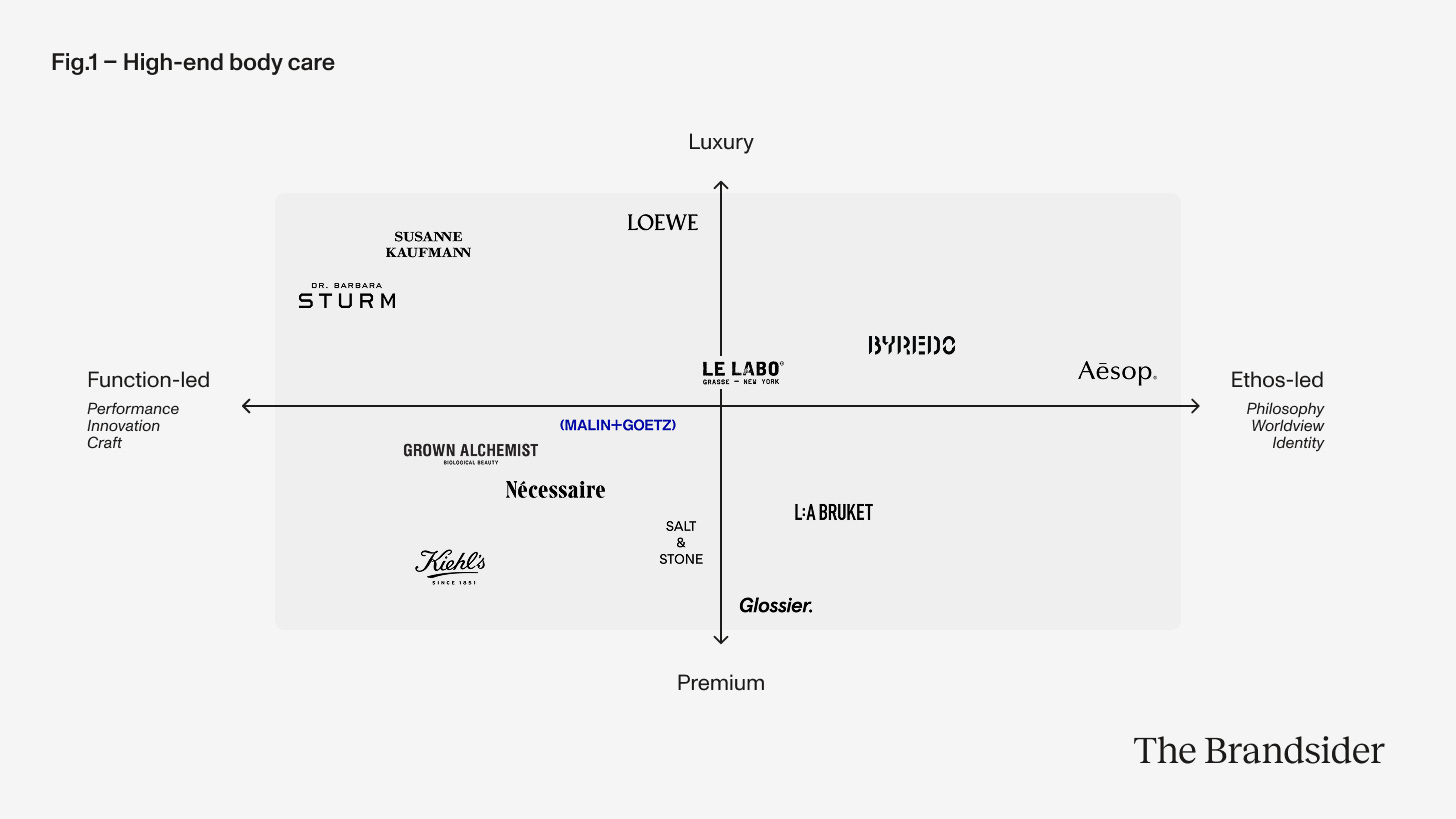
From Dr Barbara Sturm to Malin+Goetz, from Nécessaire to Salt & Stone, the market is saturated with products that look good, sound sensible, and sit within a familiar price band. Even brands that built cult followings in adjacent categories – like Le Labo, Byredo and Loewe – are now vying for their piece of the body care pie.
The category that Aesop once occupied alone has now been flooded with options for seemingly everyone. And yet, it continues to stand apart. Why is that the case?
Well, I’d argue, because while most brands in body care compete on function (what the product does, delivers, or signals), Aesop competes on ethos: a way of thinking, noticing, and holding oneself in the world.
That philosophy expresses itself through an almost obsessive level of consideration. Aesop isn’t the most exclusive. Or the most luxurious by price point. But it is the most uncompromisingly thoughtful in every detail — even when it’s inconvenient, painful, or slow.
And it works because the people it attracts recognize themselves in it immediately.
Aesop is built for those who hold themselves to equally high standards. The aesthetes who notice the resistance of a pump, the restraint in typography, the weight of a bottle in the hand. People who approach everything with precision and thought. The kind of person who has read every book on their shelf, and who finds deep comfort in doing things properly.
For these people, purchasing Aesop becomes a form of self-confirmation. Not public performance, like a luxury bag — but private validation that we are the thoughtful, considered people we hope to be. The world is loud, chaotic, and full of brands cutting corners where they think you won’t notice. Aesop is the opposite. Ordered but never sterile. Composed but never cold. A subtle return to self.
Structurally embedded ethos
Here’s where Aesop’s story becomes genuinely extraordinary. Most brands express their philosophy through marketing campaigns or mission statements. Aesop expresses it through operations. The coherence you feel isn’t decorative — it’s structural, embedded in every decision from the most visible to the most private.
The result is a world so aligned that you never question its reality. You simply accept it as truth.
Let’s begin with the stores. As you probably know, Aesop designs each location to be completely unique – responding to its history, geography, and cultural context. This alone sets it apart from virtually every other global brand, which tends to replicate a template and call it consistency.
In Kuala Lumpur, a store reimagines traditional Malay house elements in cool blue Nyatoh wood. In Leeds, the Country Arcade location revives the late Victorian ideal of bathrooms as places of leisure and restoration. In Seoul, a store references the Korean hanok tradition. In New York’s West Village, exposed brick and dark timber evoke the neighbourhood’s literary history.
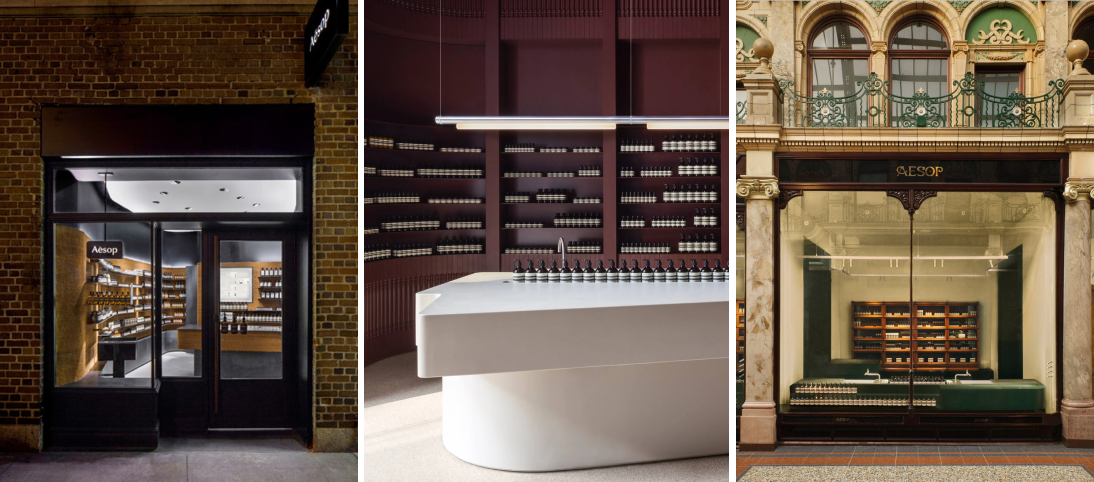
No two locations look remotely alike. Yet every single one is unmistakably Aesop. This is the most powerful form of consistency: not uniformity, but a shared language expressed through infinite variation. It’s the difference between a brand that follows rules and a brand that expresses its soul.
Aesop’s language operates the same way. The brand speaks the way it formulates: with patience, intellect, and a rhythm that never rushes. Product names like Resurrection, Tacit, and Reverence carry moral undertones. Descriptions unfold in long clauses with evocative vocabulary, unexpected punctuation, and soft final notes:
“Aromas composed for curious minds — and noses. Whether Fresh or Floral, Woody or Opulent, our fragrances bend and redefine such classifications with nuance and nonconformity.”
It’s undeniably reflective, reading like correspondence from an intellectual aesthete who happens to have opinions about moisturizer. I imagine them to have thick-rimmed glasses, and a crisp white button-down.
Even humour is filtered through this lens. The Post-Poo Drops capture something only Aesop could pull off: refinement and irreverence in the same gesture. The wit of someone so secure in their intelligence that they can afford to be playful about bathroom odours.
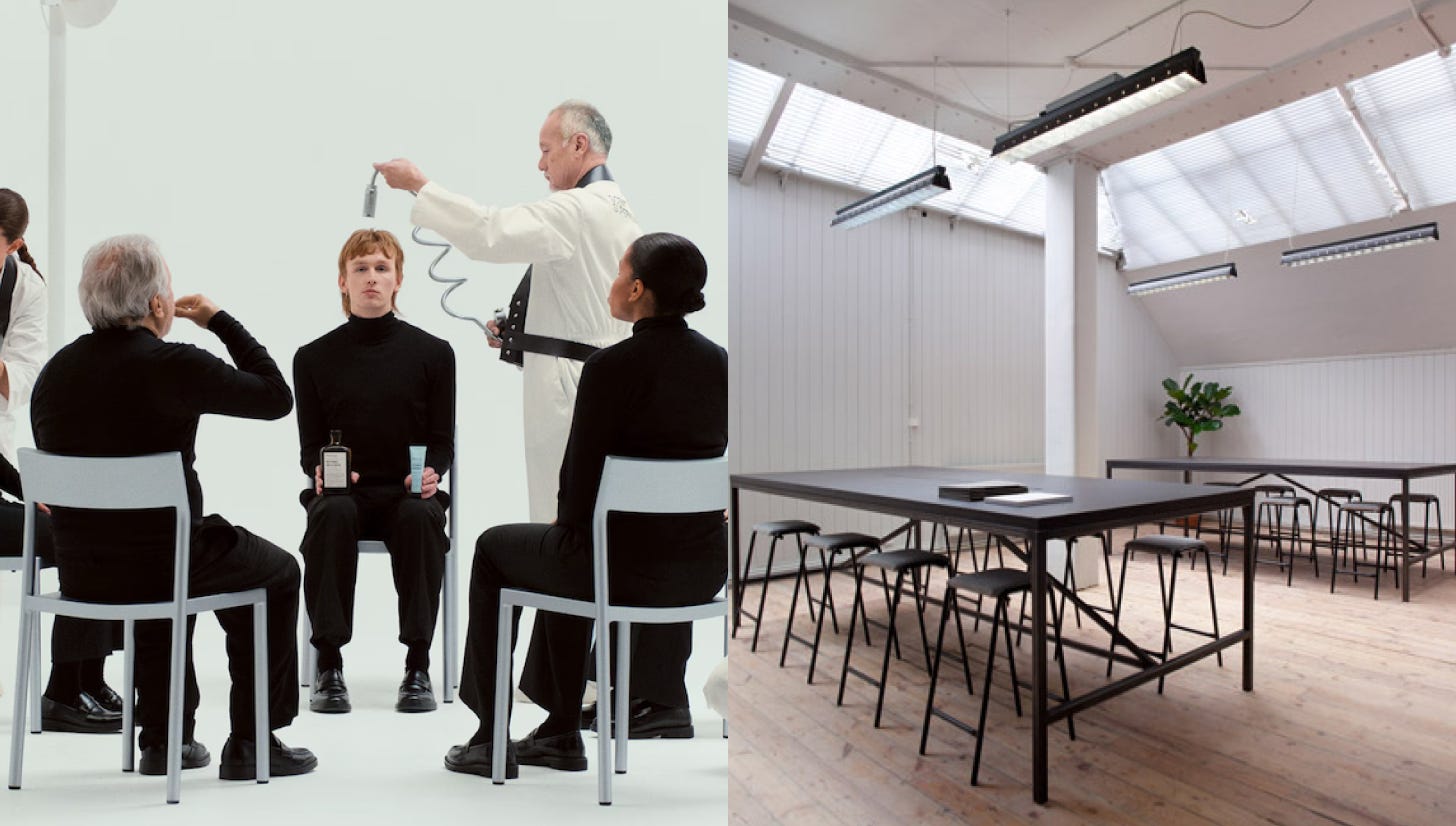
And then there are the details that no customer would ever see, but that shape the experience in ways they can feel. Only black pens are permitted in Aesop offices. Toilet paper is standardized across locations. The finance team adheres to an approved colour palette for internal graphs. Staff are discouraged from making small talk about the weather — with Paphitis once noting that “customers do not benefit from benign and obvious commentary.”
This might sound excessive, or even slightly absurd. But it’s the reason you feel something when you walk into an Aesop store that you don’t feel anywhere else. That sense of entering a world where everything has been considered, where nothing is accidental, where the standard is higher than what you’re accustomed to.
That feeling isn’t magic. It’s what happens when a brand’s uncompromising philosophy is truly embedded in every aspect of the business.
A world that rewards attention
The world of Aesop is particularly cohesive, but its unsuspecting depth is where the brand truly shines. It doesn’t just have an aesthetic exterior; it contains layers upon layers for those willing to notice them.
Every Aesop store might be different, but true connoisseurs know they have something in common: a sink at the center of the space, where customers are invited to test products, often with a consultant’s expert touch. It’s a small architectural decision that carries enormous philosophical weight: it collapses the distance between private ritual and public experience, between product and the body, between commerce and care.
And you’ll notice, upon buying your refill of luxurious hand creams, these same consultants guide you along your journey with utmost intention. Parcels are wrapped with quiet ceremony. Consultants step around the counter to present purchases with two hands. These aren’t gestures performed for show — they’re expressions of a belief that every interaction, no matter how transactional, deserves attention.
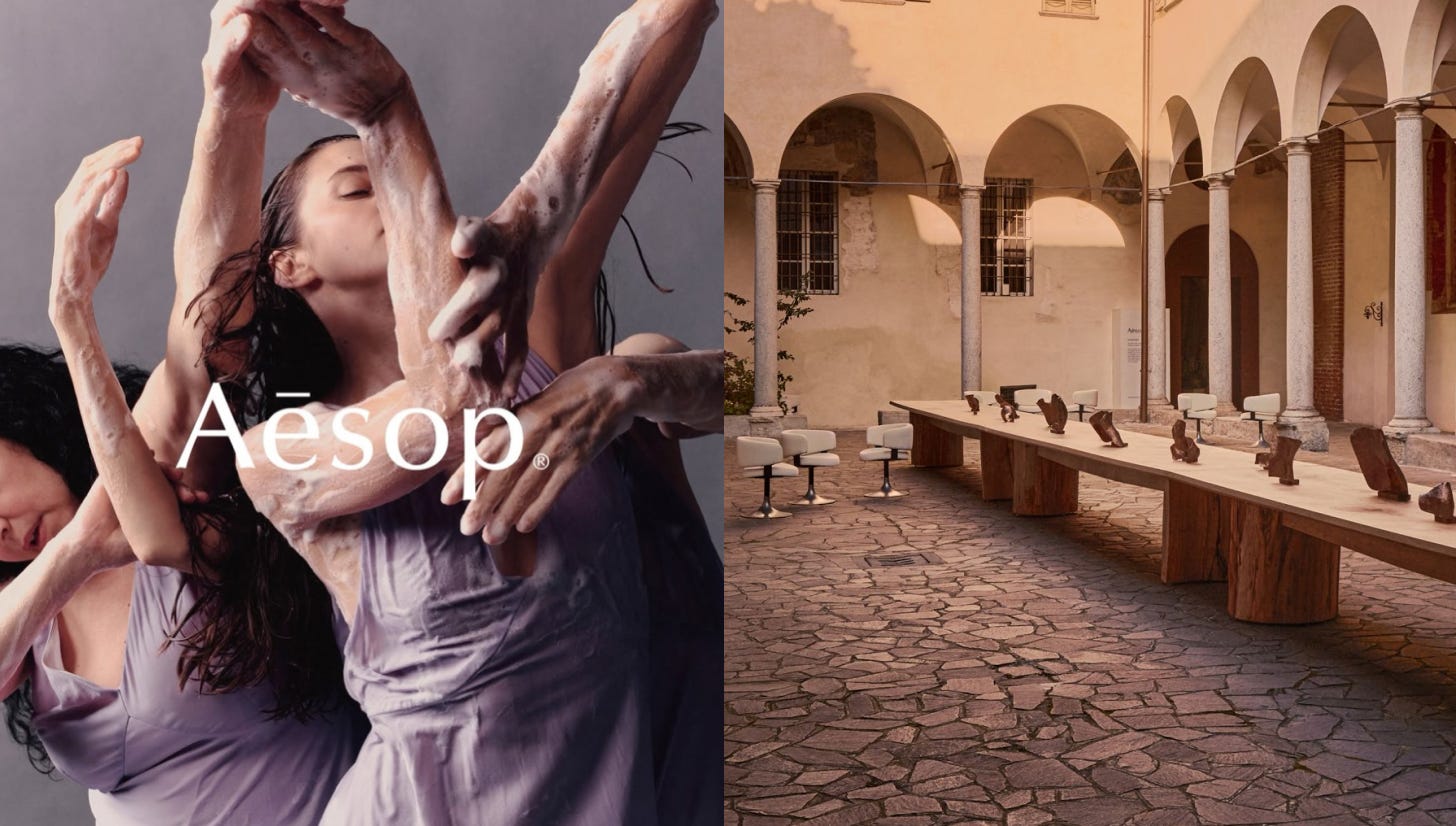
This sensory immersion extends beyond the retail experience. At Salone del Mobile Milano, Aesop presented The Second Skin, described as “a fragrant ode to the epidermis” — an artistic installation embodying the idea that care can become art. And to launch the Eleos Nourishing Body Cleanser, the brand commissioned original choreography by Nayoung Kim, transforming what could have been a conventional product campaign into a cultural expression.
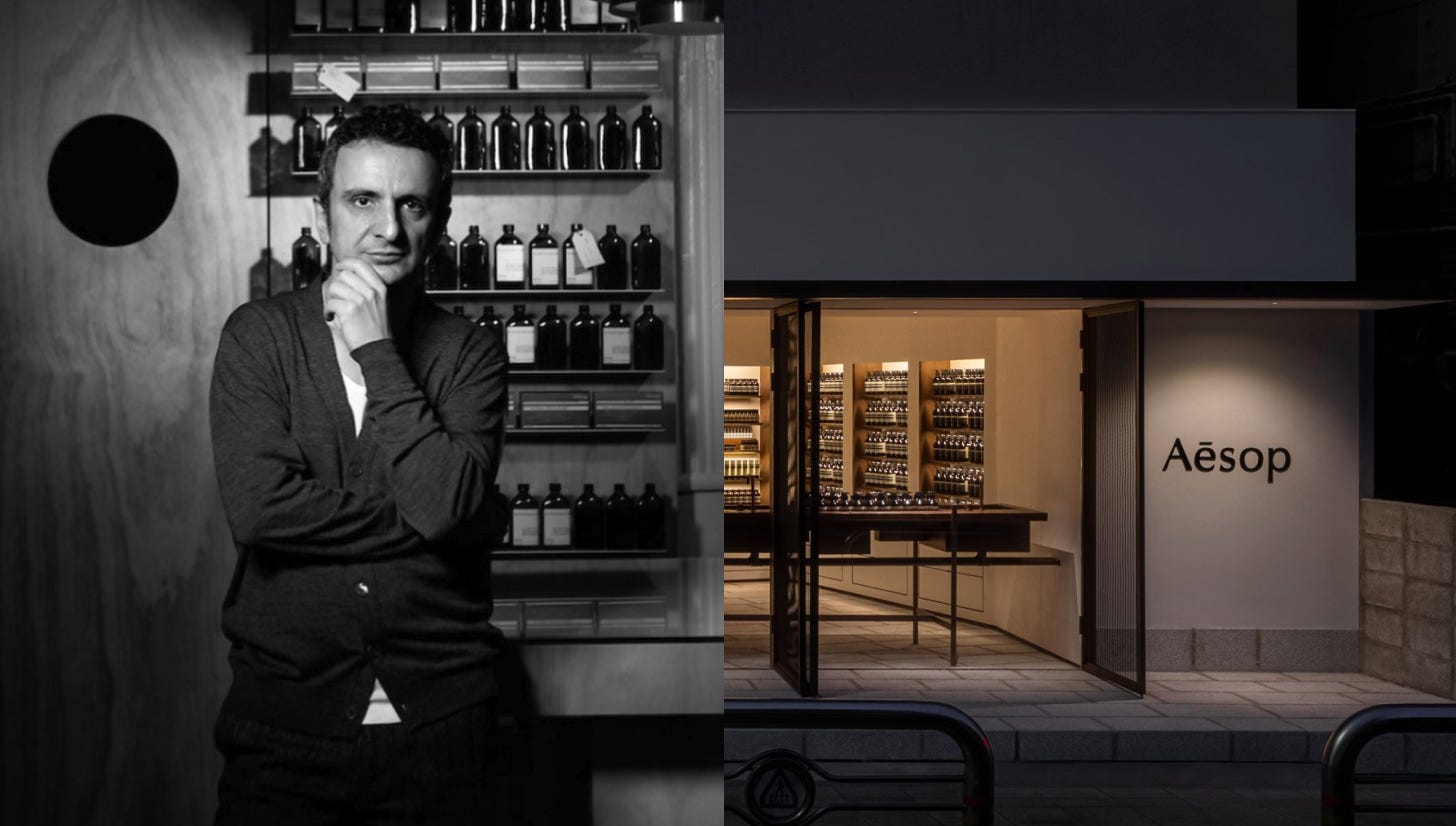
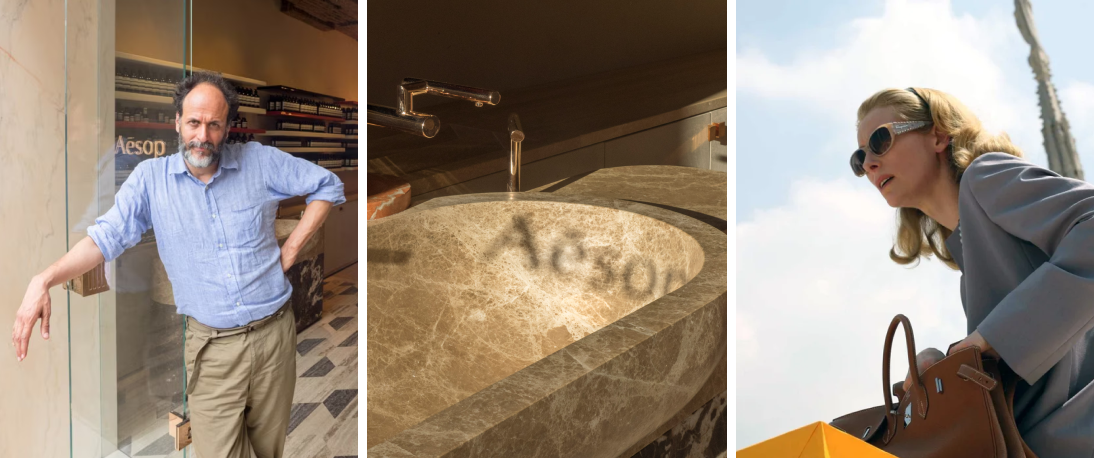
But Aesop’s connection to culture runs deeper still. The brand maintains an official filmography and has partnered with director Luca Guadagnino — a collaboration that began not through sponsorship, but circumstance. He and Dennis Paphitis met while both staying at Chateau Marmont. I Am Love was one of Paphitis’s favourite films. Guadagnino was beginning to explore spatial design.
Compared to the celebrity-led collaborations that dominate luxury marketing today, this kind of alignment can look almost accidental. In reality, it reinforces Aesop’s place within the cultural ecosystem its ideal customers already inhabit: intellectual, aesthetic, and deeply considered.
Nearly forty years in, Aesop continues to fortify the foundations of its world because it understands something that very few brands grasp: that belonging isn’t built through marketing campaigns or loyalty programmes. It’s built through depth — through creating a world so rich in meaning that insiders keep discovering new layers, and each discovery deepens their conviction that this brand was made for people like them.
The amber bottle conundrum
No matter the scale of its success, every magnetic brand eventually faces the same tension – and Aesop is no exception.
The Resurrection Aromatique Hand Wash — the amber bottle, the one the brand self-refers to as “the most coveted hand soap in the world” — was once a quiet signal among people who shared the same values. Finding one on someone’s kitchen counter told you something about who they were. It was a form of recognition between strangers who saw the world the same way.
Now, the bottle has achieved total global legibility. It appears in hotel bathrooms, UGC video backdrops, interior design mood boards. It signals status rather than understanding. People display it without knowing about the eucalyptus morning ritual in Tokyo, or the literary quotes, or even the meaning behind Aeop’s name. They own the artifact without inhabiting the world it comes from.
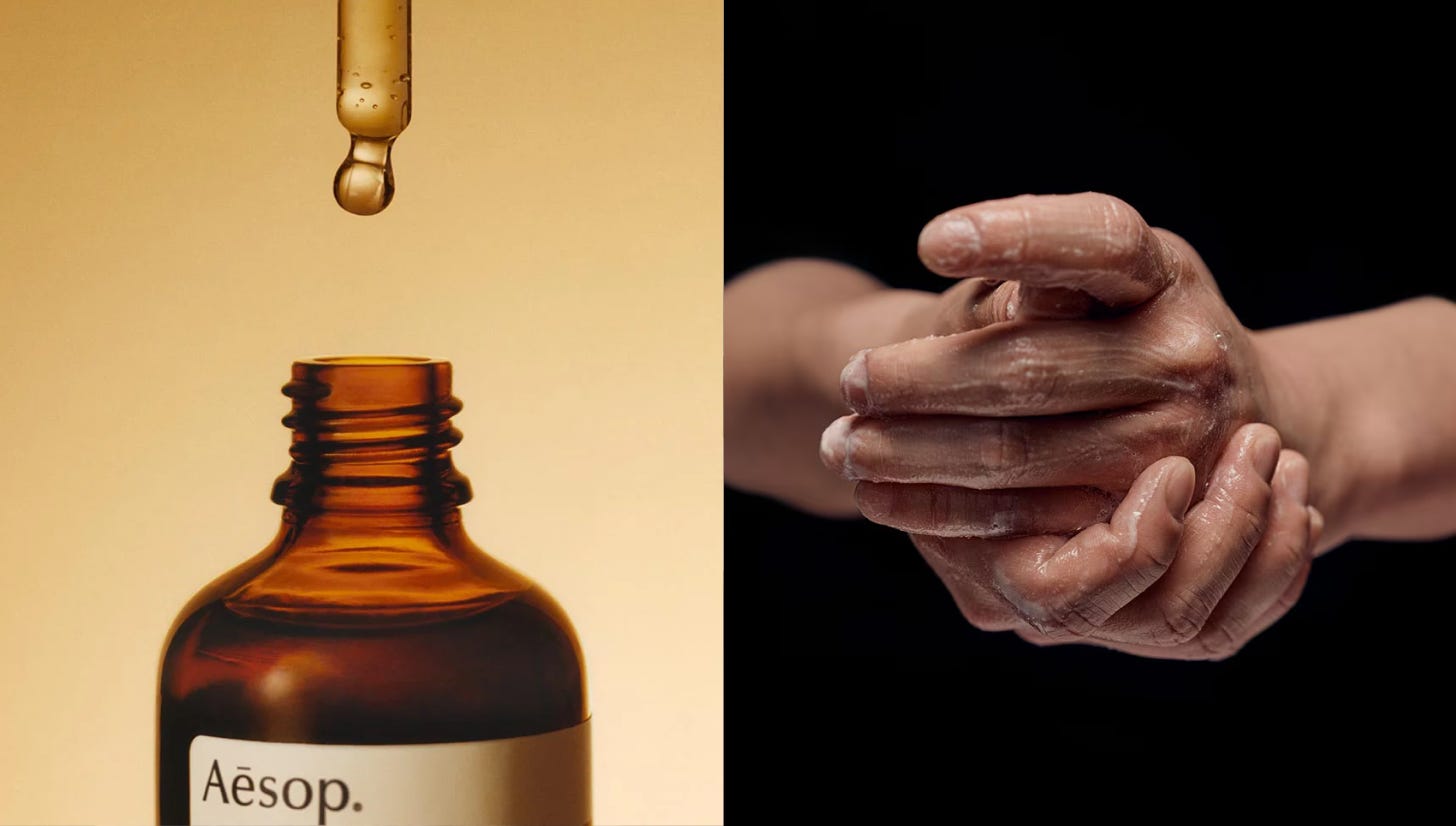
This is the paradox of success: the more legible your symbols become, the less they function as insider codes. When anyone can buy the signal, belonging becomes performance.
But, Aesop’s true insiders have already adapted, as insiders always do. The real signals now live at the edges — the Post-Poo Drops, the coffee table book that functions as a domestic totem, the ability to name which literary reference appears on which product. But the amber bottle, once the brand’s most potent symbol of shared understanding, now belongs to everyone.
The L’Oréal Question
If this were the end of Aesop’s story, it would still stand as one of the most impressive case studies in modern brand-building: a hairdresser’s philosophy, applied with absolute conviction over nearly four decades, resulting in a brand of extraordinary coherence — and, ultimately, a $2.525 billion exit to the beauty industry’s uncontested behemoth.
But the most interesting chapter might be the one being written right now.
L’Oréal is a machine designed for scale. It acquires exceptional beauty brands and grows them through operational efficiency, distribution expansion, and the full weight of its global infrastructure. This approach has been enormously successful commercially. But whether it has been successful at preserving the soul of the brands it acquires is a different question.
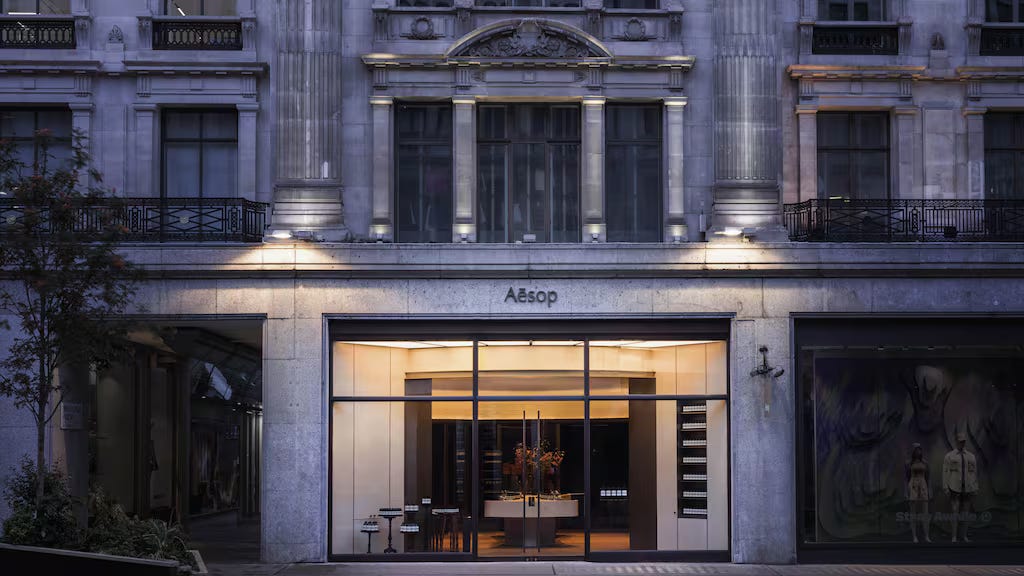
Aesop was built on the principle that thoughtfulness takes time. That products should take a decade to formulate if that’s what’s required. That stores should be designed individually, not stamped from a template. That “a capacity to endure pain where required” — Paphitis’s words — is the price of doing things properly.
Natura & Co, Aesop’s previous owner, was a good steward of this approach– in large part due to necessity. As a smaller company facing financial pressure, Natura couldn’t afford to transform Aesop into a commercial giant. They let the brand grow on its own terms, and it worked: revenue grew 20-fold under their care.
But L’Oréal’s quarterly earnings calendar operates on a different logic.
So the question now is the one that every magnetic brand eventually faces when it reaches a certain scale: can you maintain the thing that made you extraordinary once you’re inside a system with fundamentally different incentives?
In other words, can a brand built on stillness survive inside a machine designed for productivity?
I don’t know the answer. But I suspect that the brands that figure it out — that manage to scale without losing their soul — will be the ones that define the next era of luxury. And that whatever happens next at Aesop will tell us something important about whether that’s actually possible.
More reading:
A comprehensive profile on Aesop, with quotes from Paphitis (The Guardian)
Beautifully candid interview with Dennis Paphitis (The Talks)
Deep dive on Aesop’s brand codes - highly recommend (Parker Simon, Medium)
Interview with Aesop’s co-founder and creative director, Suzanne Santos (Tatler)
(Another) interview with Suzanne Santos (L’Officiel Philippines)
L’Oréal’s $2.525 billion acquisition of Aesop (Vogue Business)
The Brandsider brings you inside the world’s most magnetic brands. Subscribe for deeply researched analysis and case studies, or enquire about working together.
love this - very 'the generalist' of brand lfgggg
Brilliant read! There is such a quiet confidence is Aesop, and it’s refreshing. One can tell that every item that we look at, touch or feel has had countless hours spent to perfect. This is true brand value